01
Diagnosis
Fundental Clinic · say it “Fun Dental”
Implant dentistry and lower-jaw reconstruction under one roof — from a single missing tooth to rebuilding a jaw after cancer or injury.
Patients, families and referring dentists are all welcome. www.fundental.org
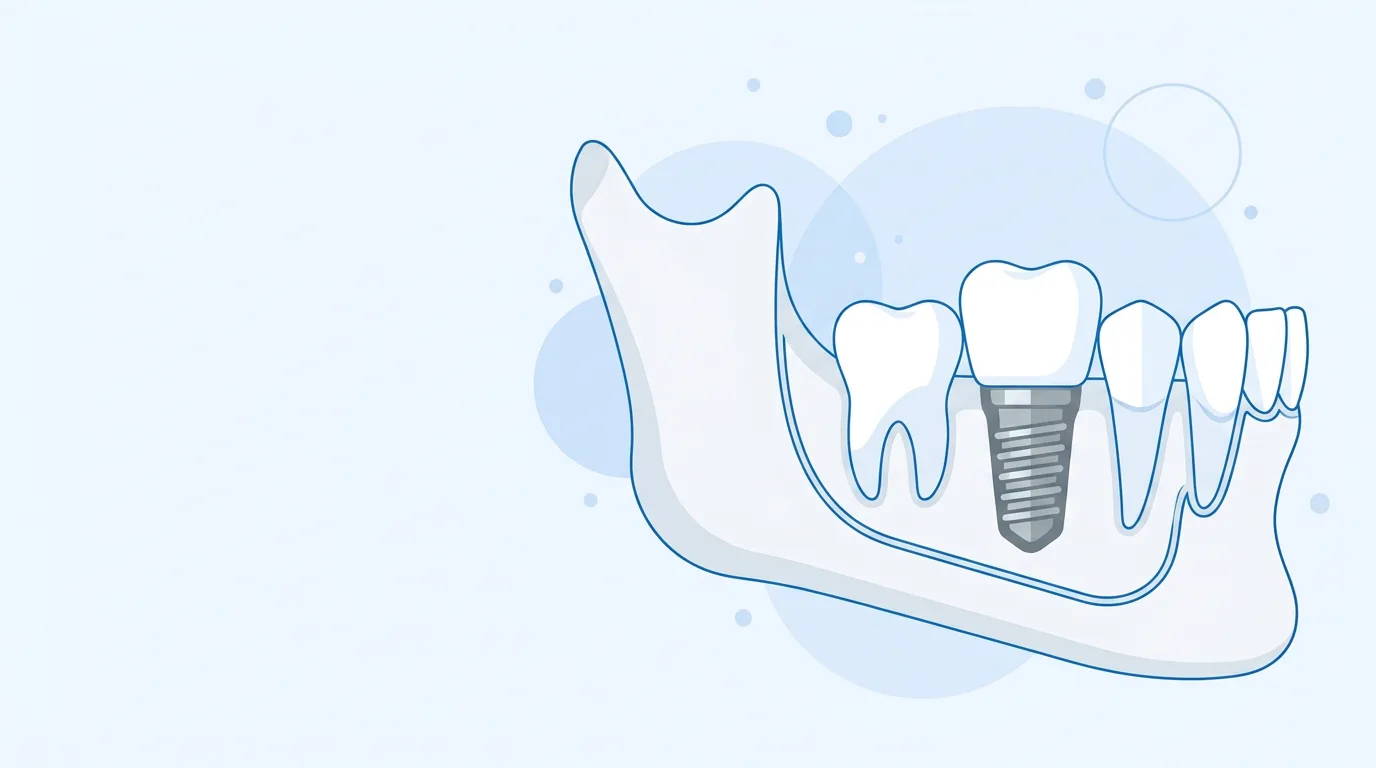
Our lead specialty
Titanium or zirconia, topped by an abutment and a crown.
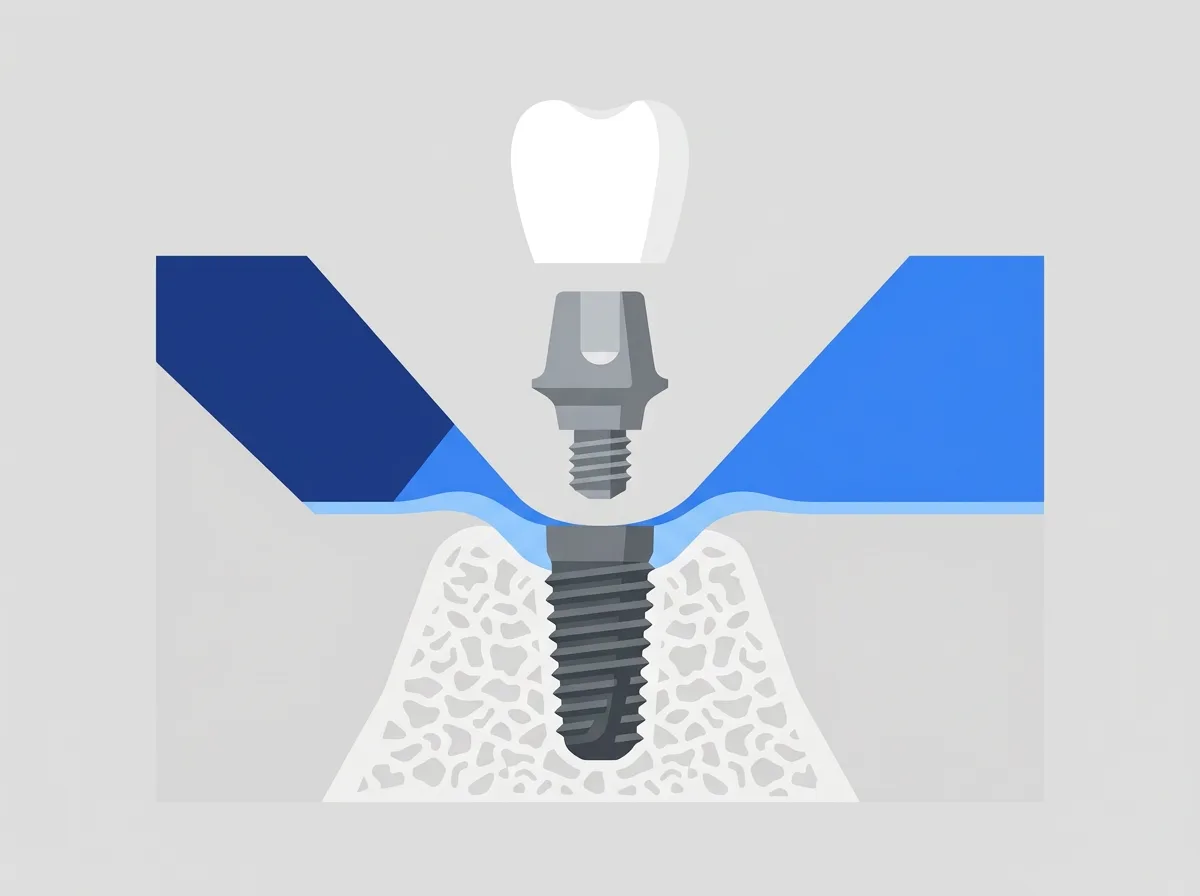
An implant is a small titanium (or zirconia) post placed in the jawbone where a tooth is missing. Over the following months the bone grows tightly onto its surface — a process called osseointegration — so the implant becomes as stable as a natural root.
A connector called an abutment is then fixed on top, and a crown or bridge, the part you see and chew with, sits on the abutment.
The artificial root, placed in the jawbone.
The connector between root and tooth, tightened with a torque wrench.
The visible tooth or teeth, made to match your smile.
One implant and one crown replace one missing tooth, without touching the teeth beside it.
For several missing teeth in a row: a fixed bridge held by two or more implants.
A complete fixed set of teeth on 4–6 implants, for a whole jaw without teeth.
A removable denture that clips onto implants, so it stays firmly in place.
When the bone is too thin or low, we build it up first so an implant has a firm base.
Implants planned on a 3D scan and placed through a printed guide, for precision and less invasive surgery.
Healing takes most of the time; the visits themselves are short.
Consultation
Treatment plan
Placement
Healing
Final tooth
For life
Implants are a well-established, long-lasting treatment when the bone, gums and oral hygiene are healthy. Smoking and uncontrolled diabetes raise the risk of failure.
Diseases & Conditions
The mandible is the lower jaw. Disease or injury can destroy part of it — most often a jaw tumor or cancer, or severe trauma.
Warning signs — see a specialist if any lasts more than 2 weeks.
Severe fractures or bone loss from road accidents, falls, sports, assaults or gunshot injuries, where a segment of jawbone is lost or cannot be saved.
Risk factors: tobacco, heavy alcohol use, areca (betel) nut chewing, HPV for some throat cancers, poor oral health.
The diseased segment is removed with safe margins of healthy tissue — a segmental mandibulectomy. Whenever possible, the jaw is rebuilt in the same operation.
Why reconstruct the jaw
The mandible shapes the lower face and supports chewing, speech, swallowing, the tongue and the airway. Losing a segment without rebuilding it can cause facial collapse, a jaw that drifts to one side, and difficulty eating and speaking.
Modern free flap surgery moves living bone together with its own artery and vein. Under a microscope, the surgeon reconnects these vessels to vessels in the neck (microvascular surgery), so the bone stays alive, heals well, and can later hold dental implants.
Treatments · Fibula free flap
First described for the mandible in 1989 (Hidalgo).
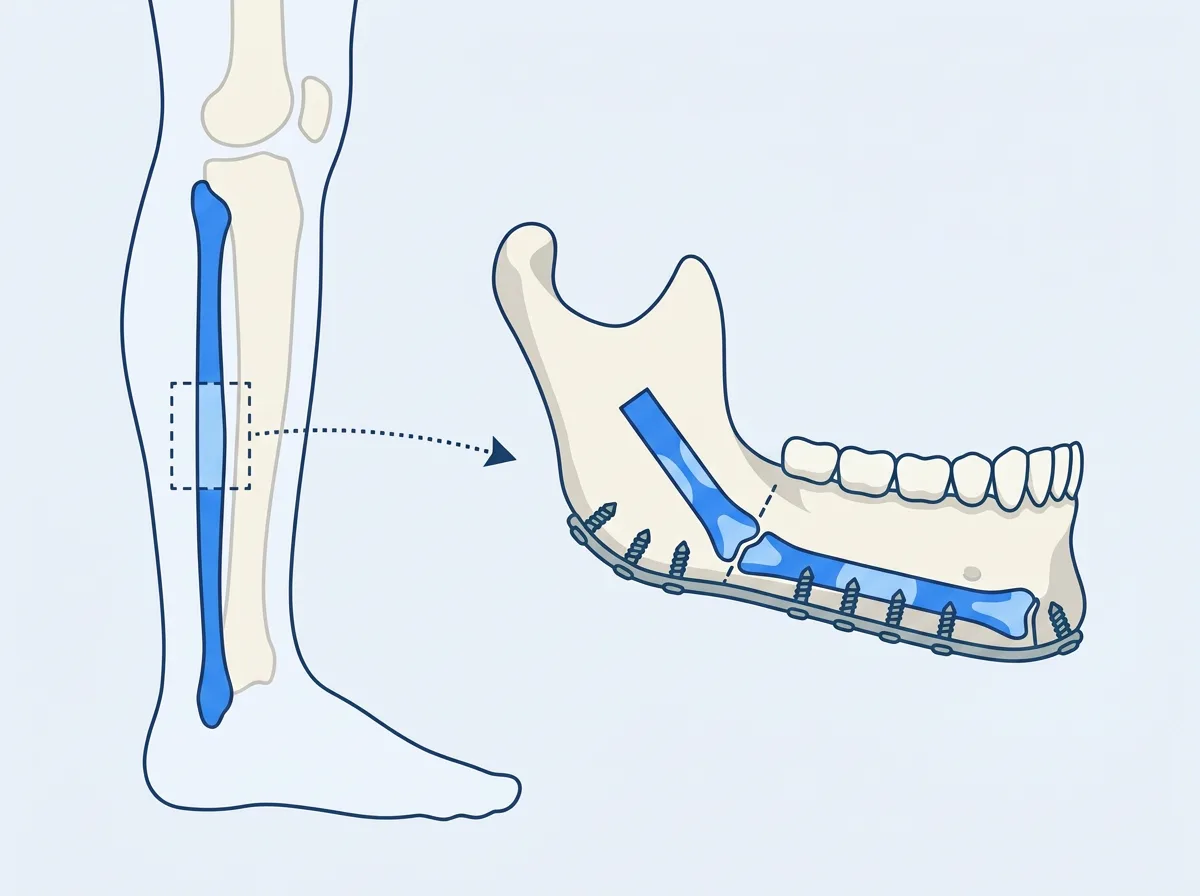
The fibula is the thin outer bone of the lower leg. It carries little of the body’s weight, so a length of it can be moved to the jaw with its blood supply, the peroneal artery and veins.
It gives a long, straight, strong bone — up to about 20–25 cm — that can be cut into segments to recreate the curve of the jaw. That makes it suited to long defects, even from one jaw angle to the other.
What it offers
Some ankle stiffness or leg weakness can occur.
Most patients walk with support within days and recover leg function well.
Treatments · Iliac crest (DCIA) flap
From the upper rim of the hip bone.
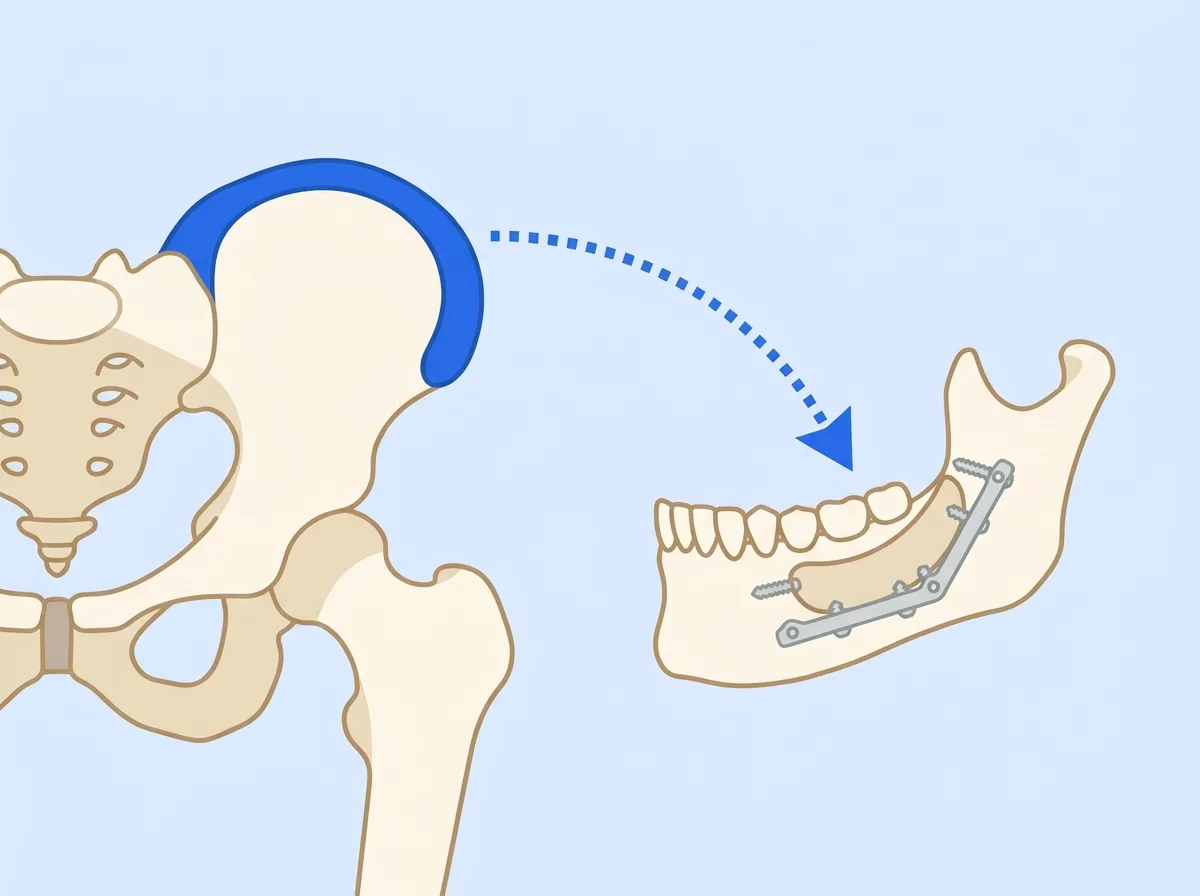
This flap uses the curved upper rim of the hip bone, the iliac crest, supplied by the deep circumflex iliac artery (DCIA).
Its natural curve closely matches the shape of the jaw, and it offers greater bone height — excellent for supporting dental implants. It is best suited to medium-length defects, especially of the jaw body and angle, and can include part of the internal oblique muscle to line the mouth.
Where there has been no radiation, non-vascularized iliac bone blocks may also be used.
Hip or groin pain and a temporary limp after surgery.
Fibula vs iliac crest
| Feature | Fibula | Iliac crest |
|---|---|---|
| Bone length | Long, up to ~20–25 cm | Shorter, for medium defects |
| Shape | Straight, shaped by segmenting | Naturally curved, jaw-like |
| Bone height for implants | Moderate, may need double-barrel | Tall, excellent |
| Soft tissue | Reliable thin skin paddle | Internal oblique muscle |
| Donor-site recovery | Lower leg, walking aided within days | Hip pain, temporary limp, hernia risk |
| Best for | Long or complex defects, including the chin | Medium body/angle defects with high implant needs |
The surgeon chooses based on defect size, soft-tissue needs, leg vessels, overall health and dental goals.
Dental rehabilitation
The goal: restore chewing, speech, appearance and confidence.
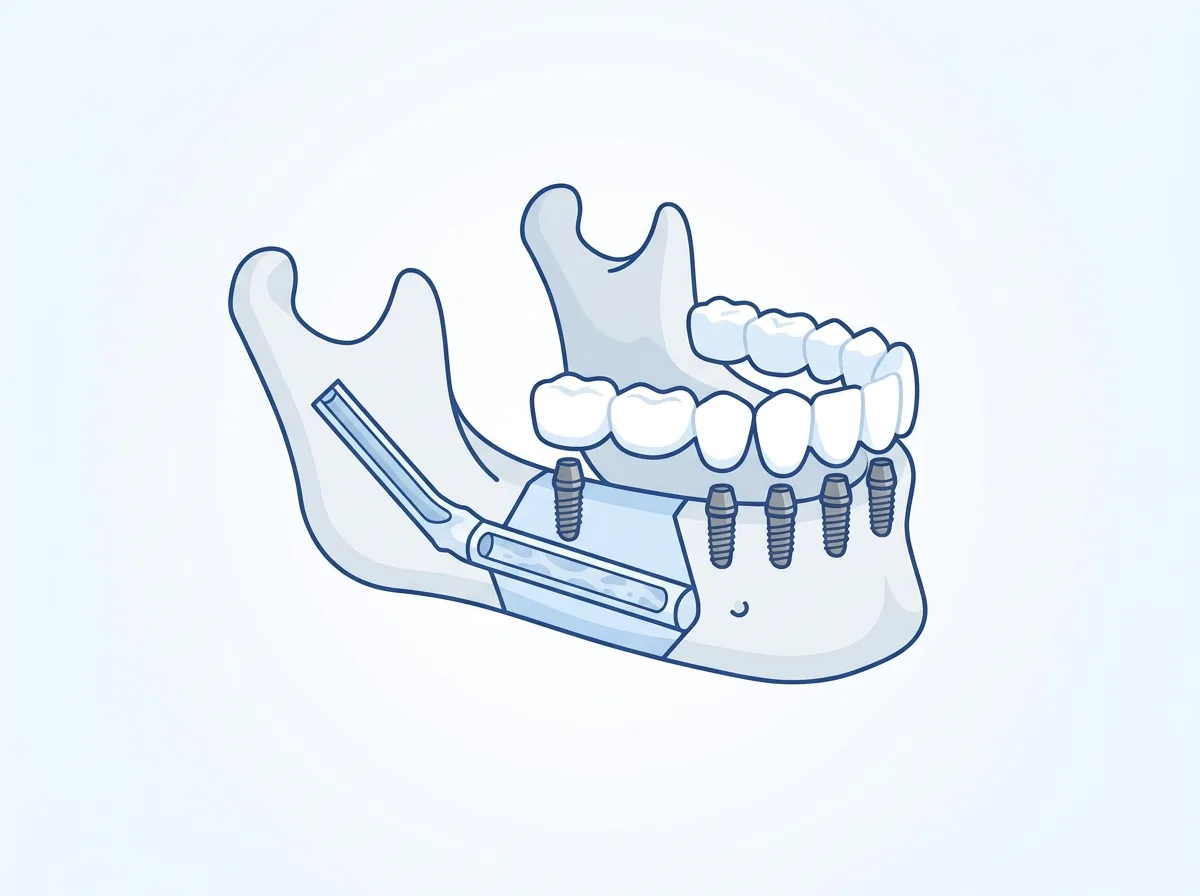
Implants are usually placed once the grafted bone has healed — often around 3–6 months, and longer after radiotherapy.
In selected cases they go in during the reconstruction itself, the “jaw in a day” approach.
Your journey
01
Diagnosis
02
Team review
Surgeons, oncologist, radiation oncologist, prosthodontist, nurses, and speech & swallowing therapists agree your plan together.
03
Planning
04
Surgery
The tumor or damaged bone is removed and the jaw rebuilt in the same operation.
05
Hospital
A temporary tracheostomy and feeding tube are sometimes needed.
06
Recovery
07
New teeth
08
For life
Recovery tips
FAQ
Most adults with healthy gums and enough bone (or bone that can be grafted) are. Smoking, uncontrolled diabetes and some medications need assessment.
It is done under local anaesthesia or sedation. Most patients report mild discomfort for a few days.
Most patients walk with support within days and return to normal activity over weeks to a few months.
Often yes, with careful planning. Timing and risk are assessed individually.
Usually several months to about a year, depending on healing and any radiotherapy.
Yes. Living vascularized bone heals into the jaw and, with implants, can support chewing.
Whether it’s one missing tooth or a jaw to rebuild, start with a conversation with our team.